

We understand that meeting our customers’ needs and earning a reputation as a reliable partner requires, among other things, maintaining a high level of service quality. Our company, KARBAZ LLC, specialises in heat and thermochemical treatment services. At this stage, we have chosen such a narrow specialisation precisely so that we can offer our customers the services we understand thoroughly, in which we have many years of experience and a sufficient base of equipment and inspection tools. Our specialists have the necessary qualifications in metal science and in the heat and thermochemical treatment of metals, as confirmed by diplomas, certificates and qualification credentials.
Types of treatment we perform
Today we perform virtually the entire range of heat treatment processes for steels and non-ferrous alloys, as well as the main types of thermochemical treatment:
Heat treatment
- Annealing: full, partial, recrystallisation, diffusion
- Normalizing
- Austenitizing
- Hardening: single-medium quenching, quenching with pre-cooling, step quenching, hardening with heating in salt baths, hardening with heating in protective coatings
- Induction hardening (HFC hardening)
- Tempering: high, medium, low, stabilising
- Age hardening
Thermochemical treatment
Processes we are mastering
- Boriding
- Siliconizing
- Diffusion chromizing
- Aluminizing
- Other diffusion metallisation processes
Black oxide coating
We also apply black oxide coatings to steel products in salt melts and solutions (chemical oxidation).
Main stages of quality control at our company
To ensure high-quality heat and thermochemical treatment services, our company has developed the necessary process instructions, according to which inspection procedures are carried out in the following areas:
Accuracy control of the equipment used
All furnace equipment used for heat and thermochemical treatment undergoes periodic certification, the results of which determine its fitness for operation and the need for adjustment or repair. Temperature monitoring and control instruments, as well as thermoelectric transducers (thermocouples) installed on furnaces and salt bath furnaces, undergo periodic verification at the standardisation and metrology centre in accordance with the norms and standards for each type of instrument. The readings of stationary furnace thermoelectric transducers (thermocouples) are periodically checked with portable reference instruments (pyrometers) and thermocouples. The temperature of quenching media is monitored with special thermometers, and their density with a hydrometer.
Quality control of materials used
Heat and thermochemical treatment involves many different consumables. For these purposes, we purchase and use certified materials that comply with Ukrainian norms and standards. Quenching oils and other, more advanced fluids are used for hardening steels and alloys. High-quality components from leading global manufacturers, certified for compliance with standards, are used to synthesise the working salts for nitrocarburizing. All materials and components used in production have quality certificates and comply with current regulations.
Control of working media composition in thermochemical treatment
The composition of the baths (salt melts) is checked at least once per shift during operation, which is necessary for constant monitoring of the saturating capacity of the melt. For this purpose, our company has the necessary laboratory equipment and reagents for rapid analysis of bath composition.

Inspection of parts before and after treatment
Incoming inspection is carried out for every batch of parts received for heat treatment, thermochemical treatment or black oxide coating. It includes visual inspection of the parts, hardness and dimension measurements, and verification of the chemical composition of the material. Each batch of parts is prepared before the treatment itself. Thorough washing and cleaning of parts in thermochemical treatment (nitriding, carburizing) is the key to obtaining high-quality hardened layers. An individual treatment scheme and temperature mode are selected depending on the material grade and the configuration of the parts.
The final stage of quality control is measuring the hardness and depth of the hardened layer. For this stage, our company has all the necessary certified equipment:


TP Vickers hardness tester
Measures the hardness of ferrous and non-ferrous metals, castings and alloys after coating by nitriding, nitrocarburizing, carbonitriding, cyaniding, carburizing or hardfacing, as well as the hardness of hardened layers.

TK-2M Rockwell hardness tester
Designed to measure the hardness of metals and alloys using the Rockwell method.

PMT-3 hardness tester
Designed to measure the microhardness of materials, alloys, glass, ceramics and minerals by pressing a diamond indenter into the test material.
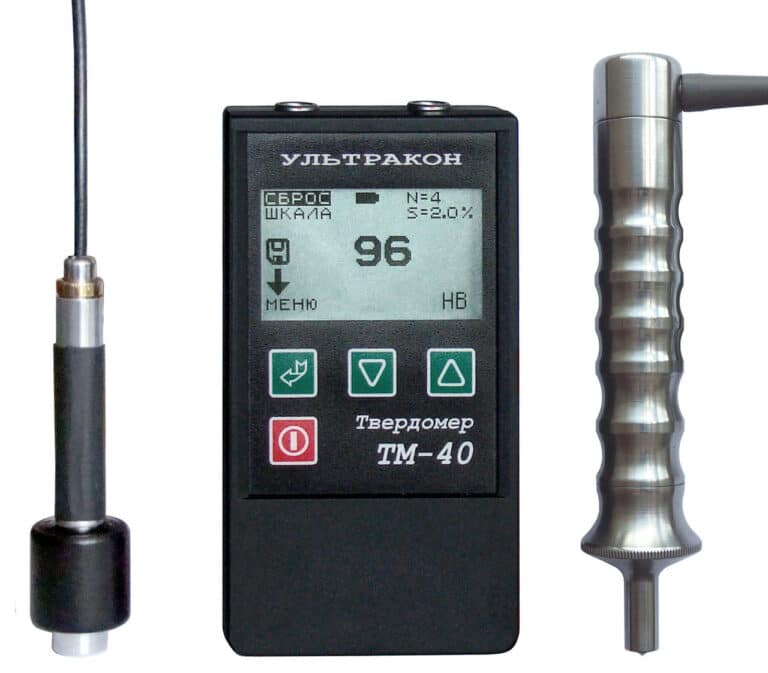
TM-40 hardness tester
Designed for rapid hardness measurement of metals and alloys on the Brinell (HB), Rockwell (HRC) and Vickers (HV) scales.

MMR-4 metallographic microscope
Designed for observing and photographing the microstructure of metals and alloys in reflected light: in bright field with direct and oblique illumination, in dark field and in polarised light.
Verification of the measuring instruments used in the above inspections

Additional methods for improving the appearance and protection of treated parts
Depending on customer requirements, parts can undergo various types of cleaning on modern equipment after treatment.

High-pressure washing
We use professional high-pressure washers that make cleaning efficient, environmentally friendly and economical, reducing tap water consumption by up to 80%. The powerful jet quickly removes contaminants even from the most inaccessible areas.
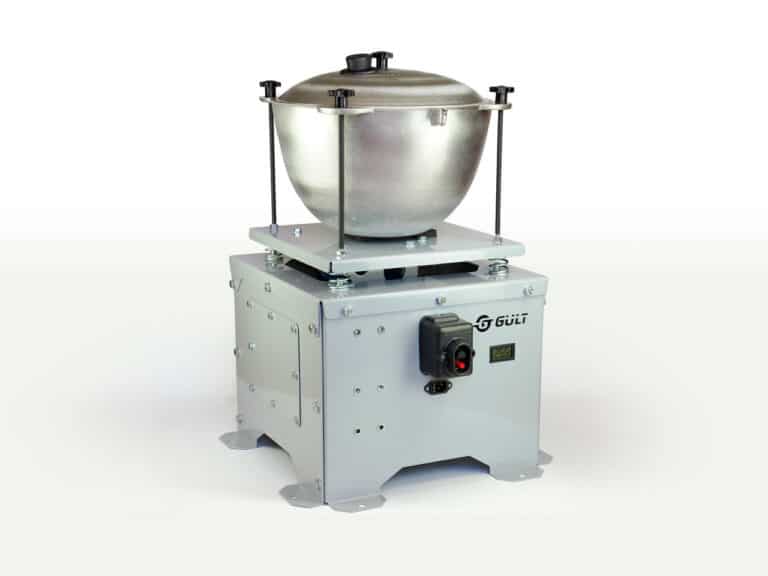
Vibratory finishing
We use vibratory finishing equipment with various German-made media, which allows us to achieve the required surface cleanliness after treatment.

Blasting with glass microbeads is carried out in a closed chamber with recirculation of the beads in a closed loop. Parts come out clean and smooth, with no abrasive residue and with their original dimensions, geometry and surface mechanical properties fully preserved.
Need heat or thermochemical treatment?
We carry out the full cycle of work with quality control at every stage — from incoming inspection to measuring the hardness and depth of the hardened layer.