

Austenitizing is an important process in metallurgy that plays a key role in shaping the properties of high-strength steels. The process begins with heating the steel to a specific temperature at which the metal structure transforms into austenite. Understanding this process and its importance allows manufacturers and engineers to improve the mechanical properties of steels, ensuring high strength, durability and resistance to various types of loads.
What Is Austenitizing?
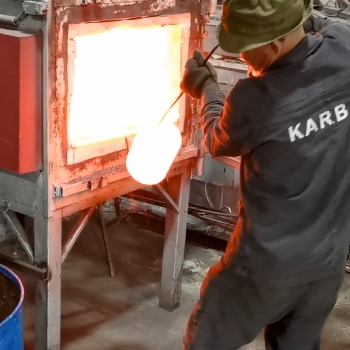
Austenitizing is a heat treatment process in which the steel structure is transformed into austenite. Austenite is a solid solution of carbon in γ-iron that forms at high temperatures. The austenitizing temperature depends on the steel composition: steel is usually heated 30–50 °C above the Ac3 critical point (Ac1 for hypereutectoid steels), which in practice is approximately 760–950 °C.
Austenitizing is essential for subsequent processing stages such as hardening and tempering. During austenitizing, carbon is redistributed within the steel structure, which improves its mechanical properties. In particular, austenitizing plays a decisive role in producing high-strength steels.
The Role of Austenitizing in the Production of High-Strength Steels
High-strength steels used in various industries, such as mechanical engineering, construction and aircraft manufacturing, require special attention to their production process. Austenitizing makes it possible to achieve an optimal steel structure that provides high strength and resistance to deformation.
The main purpose of austenitizing is to ensure uniform distribution of carbon throughout the metal structure. This is achieved by heating the steel to a temperature at which all structural constituents transform into austenite. This process helps prevent the formation of undesirable phases and defects, such as excess cementite or ferrite, which can adversely affect the mechanical properties of the steel.
After austenitizing, the steel is rapidly cooled, and austenite transforms into martensite. The martensitic structure has high hardness and strength, which makes high-strength steels ideal for use under extreme operating conditions.
Benefits of Austenitizing for High-Strength Steels
Austenitizing has a significant impact on the final properties of high-strength steels. Let us look at the main benefits of this process:
- Increased strength: Austenitizing promotes uniform carbon distribution in the steel, which significantly increases its strength. This is especially important for steels used in structures subject to high loads.
- Improved ductility: Austenitizing helps maintain the balance between the strength and ductility of the steel. This is especially important for parts that must withstand significant deformation without failure.
- Reduced brittleness: The austenitizing process helps prevent the formation of coarse grains in the steel structure, which reduces the risk of brittle fracture. A fine-grained structure provides higher resistance to cracking and other types of damage.
- Increased wear resistance: Austenitizing promotes the formation of harder phases, such as martensite, which provide high wear resistance. This is especially important for tools and parts operating under intensive friction.
- Corrosion resistance: Austenitizing can also improve the corrosion resistance of steel, especially if it is additionally alloyed with chromium, nickel or other elements. This makes high-strength steels more durable and resistant to aggressive environments.
Applications of Austenitized High-Strength Steels
High-strength steels that have undergone austenitizing are widely used in many fields. In the automotive industry, such steels are used to manufacture body parts, suspension components and chassis elements, where a combination of high strength and low weight is required. In construction, austenitized steels are used for load-bearing structures and bridges capable of withstanding heavy loads and resisting deformation.
In the aerospace industry, austenitized high-strength steels are used to manufacture components operating at high temperatures and pressures. These steels provide the necessary strength and reliability, which is crucial for the safety and service life of aircraft.
Austenitizing is a key stage in the production of high-strength steels that ensures their optimal mechanical properties. This process makes it possible to achieve high strength, ductility, wear resistance and corrosion resistance, making such steels indispensable in a wide range of industries. Proper austenitizing significantly improves the quality of the final product and ensures its long service life.